










- Calculation
- Capillary action (capillary effect)
- Capillary pore / Capillary
- Capillary water absorption
- Carbonation
- Catalyst
- Cavity / Air entrapment in concrete (unwanted)
- CE Marking / CE Declaration of Conformity
- Celsius (°C)
- CEM
- Cement
- Cement injection
- Cement paste
- Cement stone
- Cement suspension
- Certificate of conformity
- Chemically bound water
- Civil engineering / Civil engineering structure / Structural engineering
- CM Method (calcium carbide measuring method)
- Cohesion / Cohesive force
- Cohesive failure
- Cohesive soil
- Compaction of concrete
- Compaction pore
- Component
- Compression (longitudinal)
- Compressive strength - hardened concrete
- Compressor
- Compulsory mixer
- Concrete
- Concrete corrosion
- Concrete cover
- Concrete pocket (rock pocket)
- Concrete reinforcement detector (concrete cover meter)
- Concrete replacement
- Concrete spalling
- Condenser dryer (construction)
- Connection by adherence
- Construction joint
- Construction Products List (Bauregelliste BRL)
- Coring
- Corrosion (metals)
- Corrosion of reinforcement
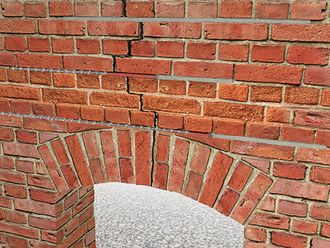
- Crack
- Crack cause
- Crack depth
- Crack direction
- Crack edge
- Crack flank
- Crack injection
- Crack magnifier
- Crack mapping
- Crack movement monitor
- Crack type
- Crack width
- Crack width changes
- Crack width ruler
- Curtain injection
CEM
Acc. to DIN 1164-1 and EN 197-1 cement is classified into 5 main types: CEM I - Portland cement, CEM II - Portland composite cements, CEM III - blast furnace cements, CEM IV - pozzolanic cements, CEM V - composite cements.